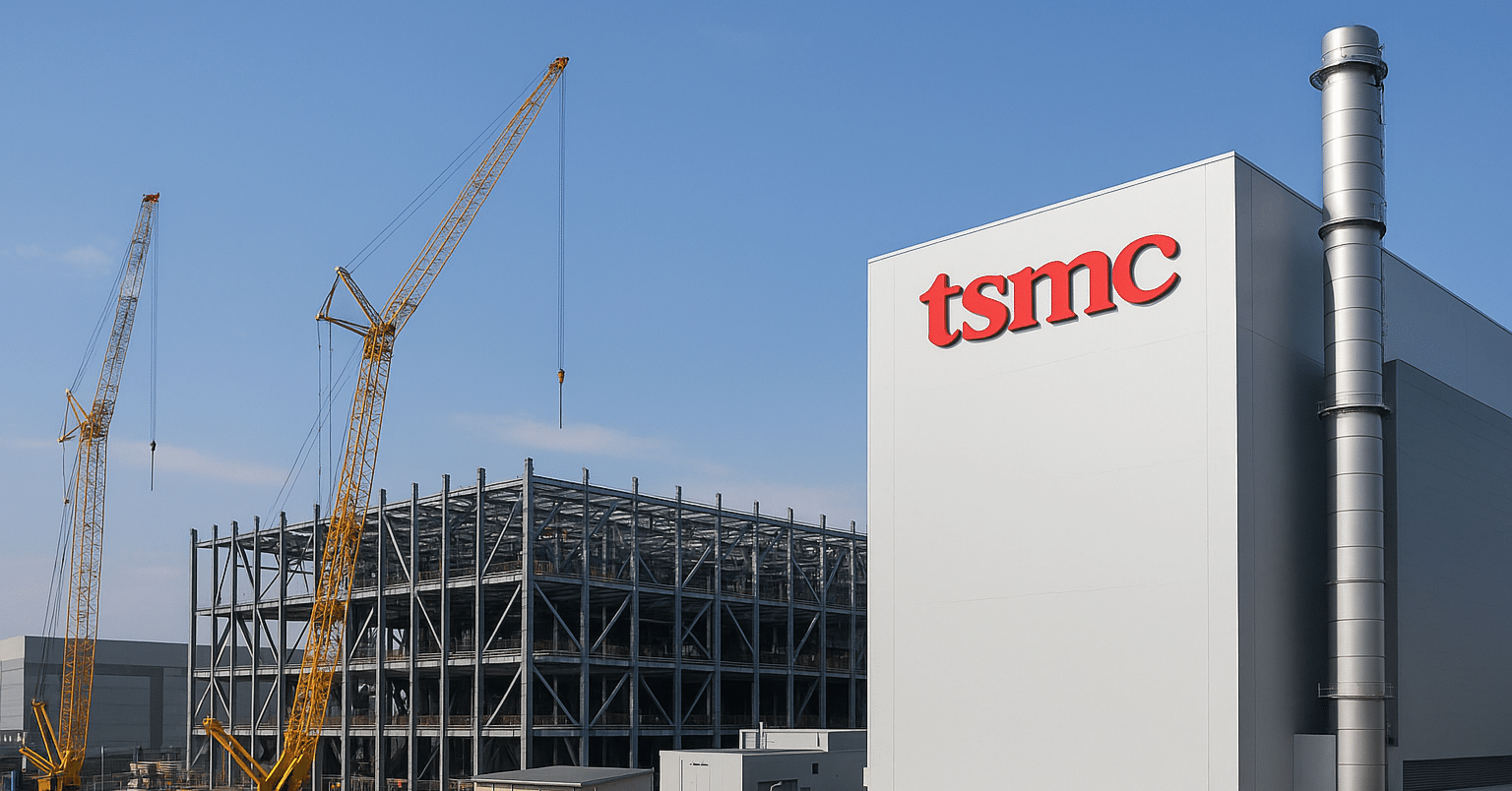
JASM, a subsidiary of TSMC, has signed a site agreement with Kikuyo Town, Kumamoto Prefecture for the location of its second plant, and has begun construction in earnest as a domestic mass production base for 6nm generation semiconductors.
🟧TSMC Kumamoto officially starts construction of its second plant and expands to mass production of 6nm, with a total investment of 3.4 trillion yen
JASM, the Japan subsidiary of Taiwan Semiconductor Manufacturing Co., Ltd. (TSMC), has signed a site agreement with Kikuyo Town, Kumamoto Prefecture for the construction of its second plant. The new plant is scheduled to start operations in December 2027 and will produce advanced 6-nanometer generation logic semiconductors. With a focus on autonomous driving, advanced automotive control, and industrial equipment applications, this move is to further strengthen the mass production system of advanced semiconductors in Japan.
- Investment: Approximately $13.9 billion (approximately 2.1 trillion yen). The Ministry of Economy, Trade and Industry supports a huge amount of subsidies.
- Production technology: Adopt 6nm process, higher performance than the first factory (12/16nm).
- Employment scale: 1,700 people will increase to a total of 3,400 people.
The second factory is located to the east of the first factory and has a construction area of about 69,000 square meters. TSMC as a whole has invested a total of 22.5 billion dollars (about 3.4 trillion yen) in the first and second factories, and the government has solidified a support policy of 1.2 trillion yen.
🟧 Why is advanced logic production in Japan expanding now?
The construction of JASM’s second factory aims to diversify geopolitical risks in the semiconductor supply chain and increase the independence of domestic production. As automobiles become more electrified and autonomous around the world, the demand for high-performance chips for automotive applications is rapidly increasing. On the other hand, as dependence on Taiwan, South Korea, and the United States continues, the Japan government is supporting TSMC in a way that encourages the “return of manufacturing bases to Japan.”
The second plant will move to a higher-value-added advanced node and aim to be able to respond to long-term market fluctuations. In terms of competition, Lapidus (Hokkaido) is also accelerating its movement towards 2nm prototypes, and the movement to revive semiconductors in Japan is in full swing.
🟧Summary
TSMC’s second plant in Kumamoto will be the most advanced manufacturing line in Japan for the 6nm generation, and it is a project that symbolizes the restructuring of the domestic supply chain with government support. The ripple effect on the local economy is also significant, and expectations are high for the accumulation of related companies and human resource development.
👉 I feel that TSMC’s expansion in Kumamoto will be the starting point for redrawing the “semiconductor map of Japan” again.