As automotive semiconductors become increasingly complex, major players such as GlobalFoundries and Infineon are participating in the chiplet development program led by Belgian research institute imec to realize new architectures for the software-defined vehicle era.
First foundry and suppliers join Automotive Chiplet Program | imec
🟧 imec leads the new trend of automotive semiconductors, chiplets
imec, a leading Belgian research institute, has announced that it has welcomed GlobalFoundries (GF) as a foundry partner for its Automotive Chiplet Program (ACP). In addition, companies in the semiconductor and autonomous driving fields such as Infineon, Silicon Box, STATS ChipPAC, and TIER IV have also announced their participation, accelerating the new design trend of automotive semiconductors.
- Key takeaways: GF will leverage its manufacturing sites and advanced processes in the U.S., Europe, and Asia to support the development and mass production of automotive chiplets.
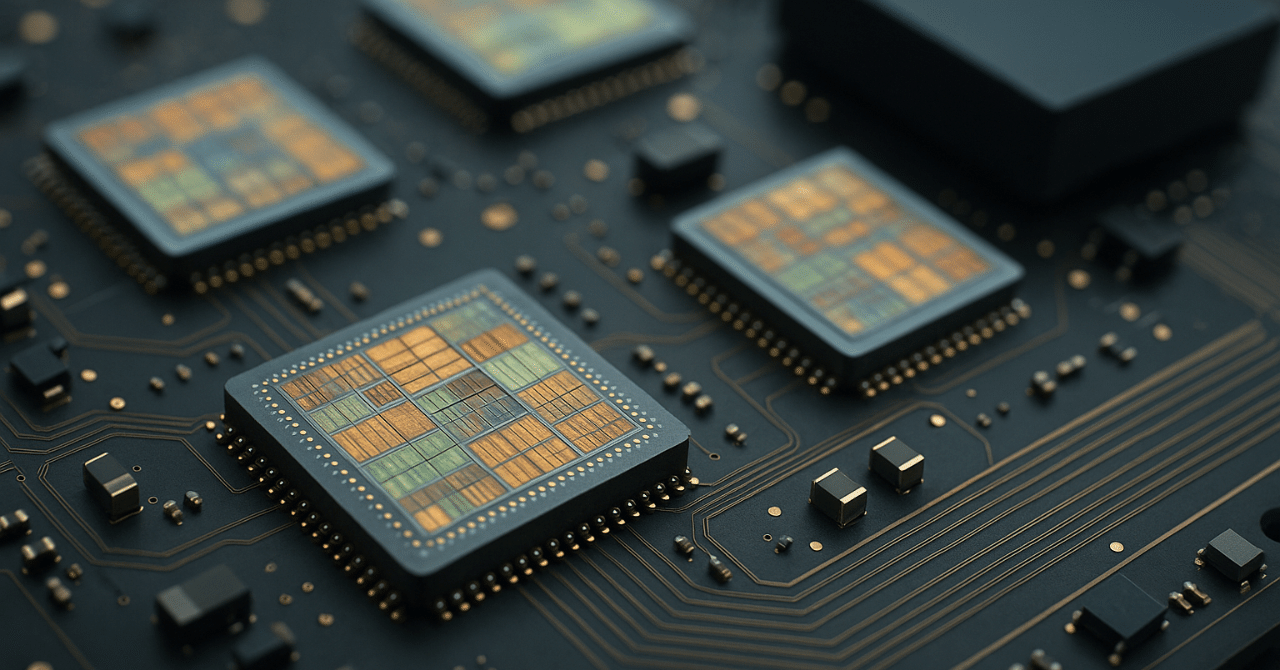
- Technical features: The chiplet architecture is a structure that combines small chips divided by function, making it scalable, flexible, and cost-effective.
- Expected markets and applications: The main focus is on high-performance computing systems installed in next-generation software-defined vehicles (SDVs), autonomous driving, ADAS, and in-vehicle infotainment.
Although this ACP is in the basic research stage, it aims to establish an architecture and packaging technology that meets the “safety, reliability, and durability” of automotive-grade applications, and is attracting attention from both the automotive and semiconductor industries.
🟧 Is it a chiplet now? —The restructuring required by the SDV era
In recent years, the automotive industry has undergone a significant shift from “hardware-centric” to “software-centric.” With the spread of electrification and autonomous driving, in-car computers are now required to perform enormous amounts of processing, such as AI calculations, sensor integration, and network control. However, conventional monolithic chips (large-scale SoCs with a single component) have apparent limitations in terms of development costs, heat generation, design time, and reliability.
That’s where the chiplet system came in. Functions such as compute, communication, memory, and power control can be manufactured as independent chips and connected in a package, allowing for the flexibility to combine optimal processes. This increases development speed and reusability, making it easier to adapt to the evolution cycle of automotive systems.
🟧Summary
It marks a turning point in the evolution of automotive semiconductors from a “single chip” to a “chiplet configuration”. With manufacturing and design leaders such as GlobalFoundries and Infineon coming together on imec’s research platform, the development of semiconductors at the heart of next-generation vehicles has begun to move on a global scale.
Going forward, the focus will be on which automakers will adopt this new chiplet platform and apply it to which areas (ADAS, AI control, and in-vehicle communications).

