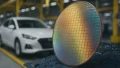
SK hynix has started mass production of the industry’s first 321-layer QLC NAND, and is trying to open up an era of high-capacity and high-efficiency storage for AI servers and data centers.
SK hynix Begins Mass Production of 321-Layer QLC NAND Flash
🟦SK hynix Starts Mass Production of 321-Layer QLC NAND
SK hynix has developed a 2Tb capacity “321-layer QLC NAND flash” and has begun mass production. It is the world’s first QLC product with more than 300 layers and is expected to be commercialized in the first half of 2026. It offers significant improvements in capacity, speed, and efficiency compared to traditional QLC products, marking a new milestone in meeting AI demands.
- Main content
of the announcement The world’s first 321-layer QLC NAND was developed and mass production began. It achieved 2 Tb capacity, which is twice the existing one. - Technical Features and Benefits
: Expanded the number of planes from 4 to 6 to enhance parallel processing performance. Double data transfer speeds, 56% better write performance, and 23% better power efficiency. - Introduced from PC SSDs for target markets and applications
, and deployed to eSSDs for data centers and UFS for smartphones. 32-die simultaneous stacking technology “32DP3” also has an eye on ultra-large capacity SSDs for AI servers.
🟦Growing AI Demand and the Evolution of NAND
With the rapid expansion of AI and cloud services, storage that can process data “more, faster, and more efficiently” is essential for data centers. While QLC (1-cell 4-bit) has high capacity efficiency, it has had challenges in terms of durability and speed. SK hynix overcame this weakness by increasing the number of planes and layers, achieving both practical performance and large capacity. Competitors Micron and Kioxia/Western Digital are also preparing 300-tier products, but the fact that QLC was the first to achieve utility-level performance is a major differentiator.
🟦 Summary
SK hynix’s 321-layer QLC NAND delivers increased capacity and improved performance at the same time, significantly strengthening the company’s position in the AI server and data center markets.
Speaking of additive technology, it is a field where Japan used to demonstrate its strengths, but now it is impressive that South Korea is leading the way.